Build and Learn: Precast Hollow Core Plank
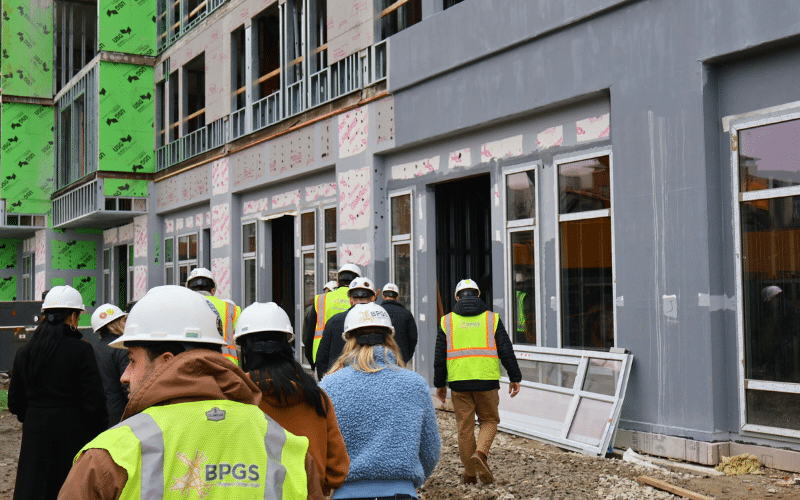
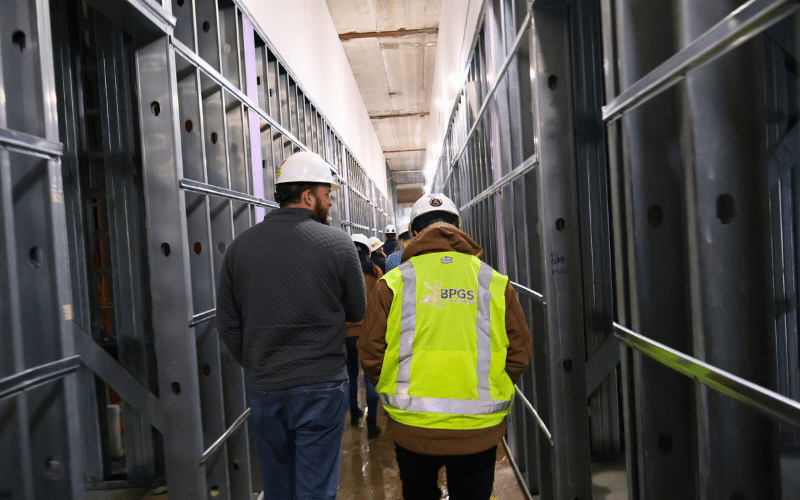
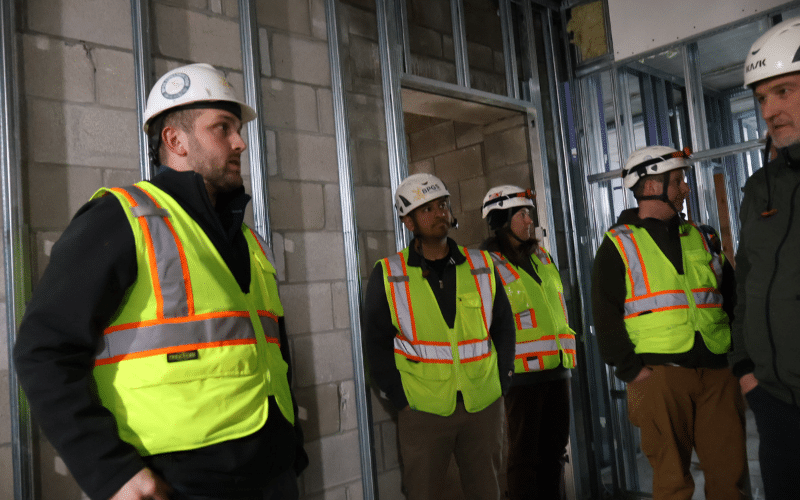
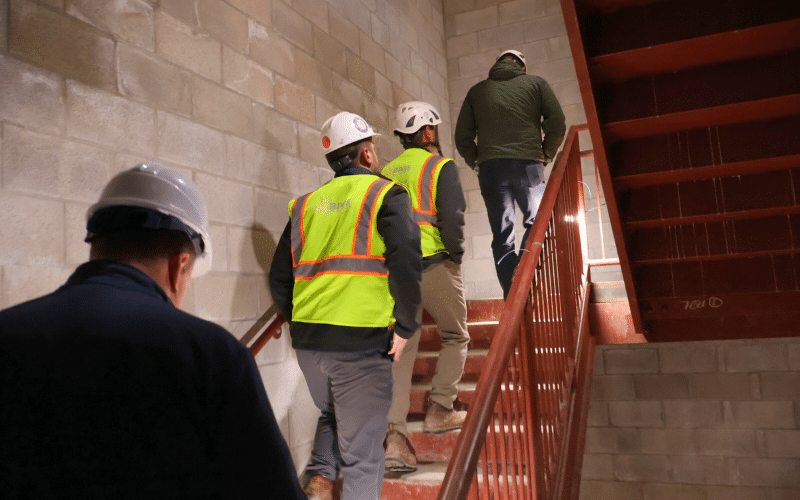
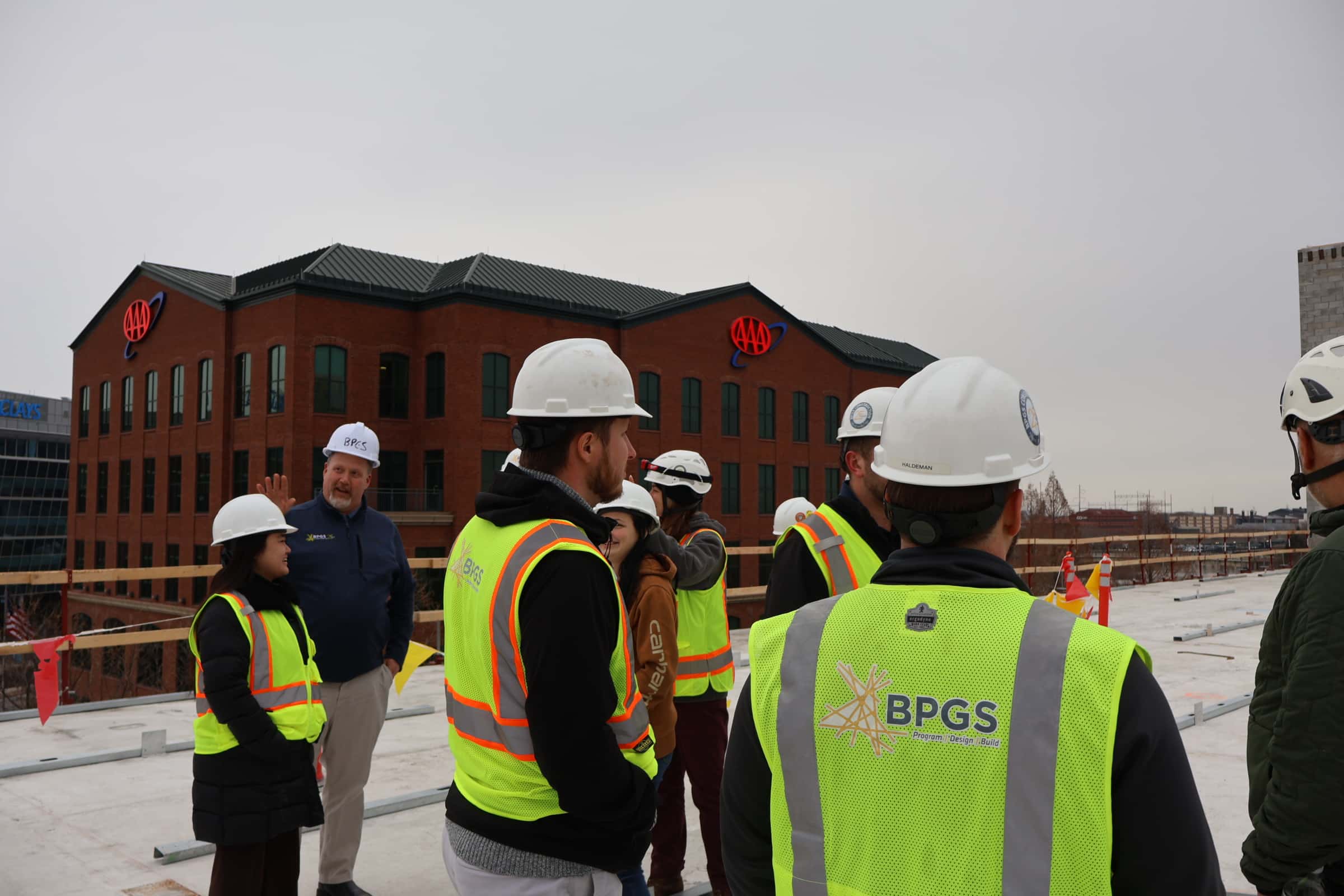
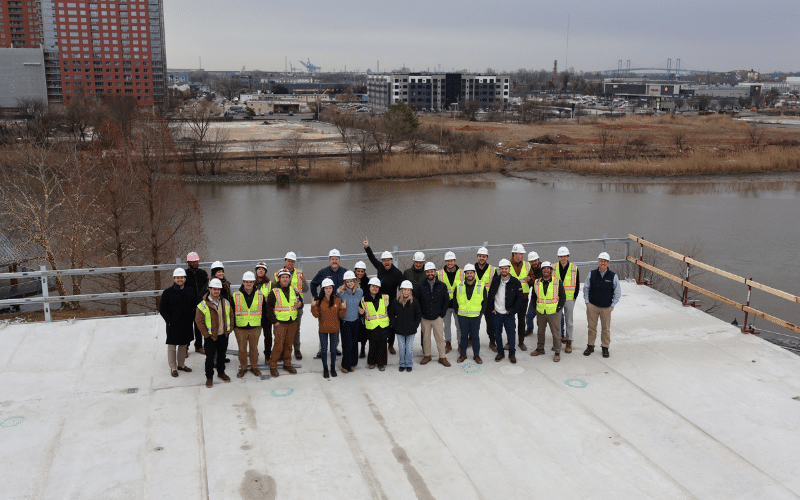
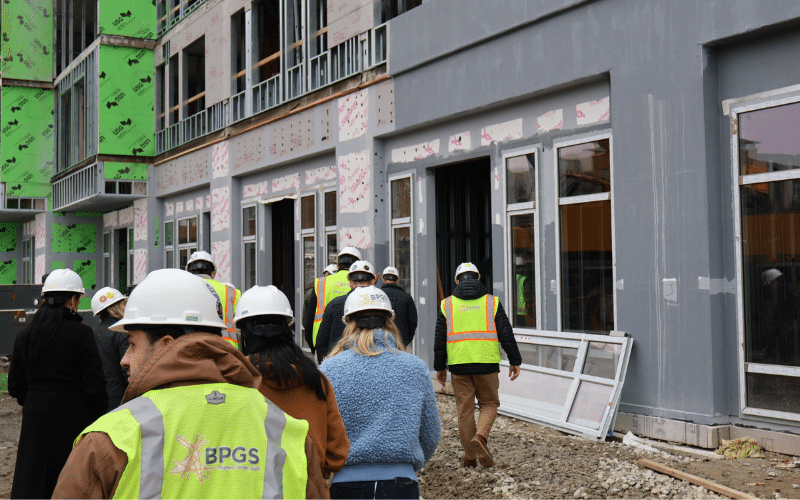
March 9, 2026 7:43 pmAt BPGS Construction, continuous learning is central to our culture. Our Build and Learn sessions bring associates together on active job sites to explore technical project elements and solve real-world challenges in the field. This month, the team revisited Justison Landing Parcel 1 (JLP1), an upcoming 164-unit luxury apartment community on the Wilmington Riverfront, to focus on the complexities of precast hollow core plank.
Selecting a floor system requires balancing structural loads with construction speed. While precast plank offers significant efficiency, it introduces unique hurdles—from high-stakes crane coordination to managing tight fabrication tolerances. Even small miscalculations in the delivery sequence or alignment can lead to structural conflicts and costly delays. At JLP1, the team addressed these obstacles through strategic expertise and calculated team coordination.
Selecting a floor system requires balancing structural loads with construction speed. While precast plank offers significant efficiency, it introduces unique hurdles—from high-stakes crane coordination to managing tight fabrication tolerances. At JLP1, our Structural Engineer established a design that addressed these obstacles through precise specifications and calculated coordination.
Plank Strategy at JLP1
Structural efficiency at JLP1 relied on matching the right plank specifications to the building’s varying spans and safety requirements. The strategy, dictated by the project’s structural engineers, focused on three key areas:
-
Hollow Core Plank: The project utilized 8”-thick pre-stressed hollow core planks throughout. These longitudinal cores reduce the overall weight of the floor system while providing the high structural strength and acoustic separation necessary for luxury multi-family living.
-
Topping vs. No Topping: To maximize speed and economy, most levels were designed without a structural concrete topping. However, for Level 3, a 2” concrete topping was required to achieve a 3-hour fire rating, ensuring the project met strict code requirements where standard 2-hour planks were insufficient.
-
Solid Infills: Rather than addressing concentrated point loads, the structural design accounted for load-bearing walls acting as distributed loads. This required grouting all bearing ends of the cores solid under the load-bearing walls to reinforce the plank’s shear capacity and ensure weight is distributed safely to the vertical structure.
Coordination and Adaptation
The installation of precast plank is a high-speed logistical exercise. At JLP1, this required a detailed “Crane Dance,” coordinating a 265-ton crane within a tight urban footprint to set planks in a sequence that allowed metal framing teams to follow immediately behind.
The team’s adaptability was tested by the inherent nature of precast material tolerances. Because planks can arrive with slight variations in “camber” (arch) or thickness, they don’t always sit perfectly flush. At JLP1, these discrepancies created potential elevation conflicts for the load-bearing walls. To stay on schedule, the team used a concrete scarifier to grind down high points in real-time. This adjustment ensured a level base for the framing and prevented wall overhangs without the need for structural shims.
Lessons from the Field
-
Precision in the “Pick” – Delivery and erection sequences must be perfectly aligned; a single plank loaded out of order can stall the entire crane operation.
-
Account for Camber – Pre-stressed planks naturally crown. Early coordination between the manufacturer and the framing sub is essential to manage these elevations before they impact interior finishes.
-
Leveling and Grouting – Ensure bearing surfaces are level before the plank arrives.
-
Plan for Fire Ratings – Identify 3-hour requirement zones early. Catching these before fabrication allows for modifications like solid-filled cores rather than adding a concrete topping late in the process.
Building Knowledge, Strengthening Teams
Our Build and Learn sessions are opportunities to share lessons, refine best practices, and strengthen our collective expertise. Building with precast materials demands disciplined logistics and the ability to solve tolerance issues on the fly. At JLP1, the team demonstrated how technical adjustments and proactive planning keep a complex multi-family project moving forward.
If you’re passionate about collaboration, technical growth, and building with purpose, explore opportunities to grow with BPGS Construction.