Build and Learn: Plumbing Rough-In and Wood Construction at UD STAR
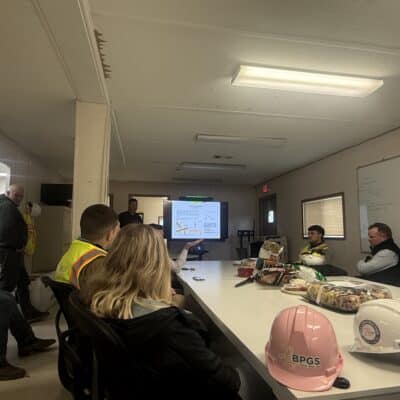
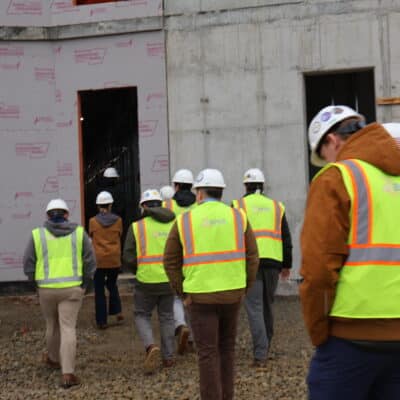
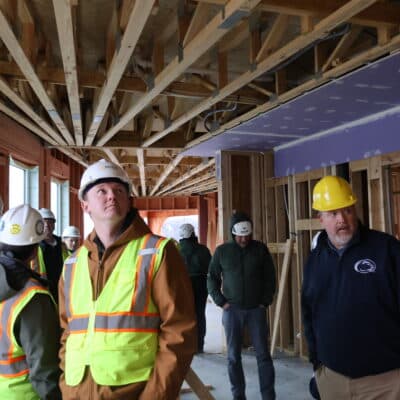
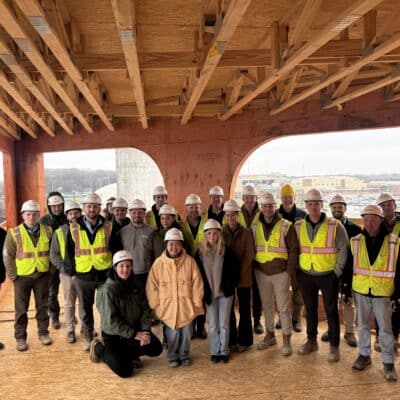
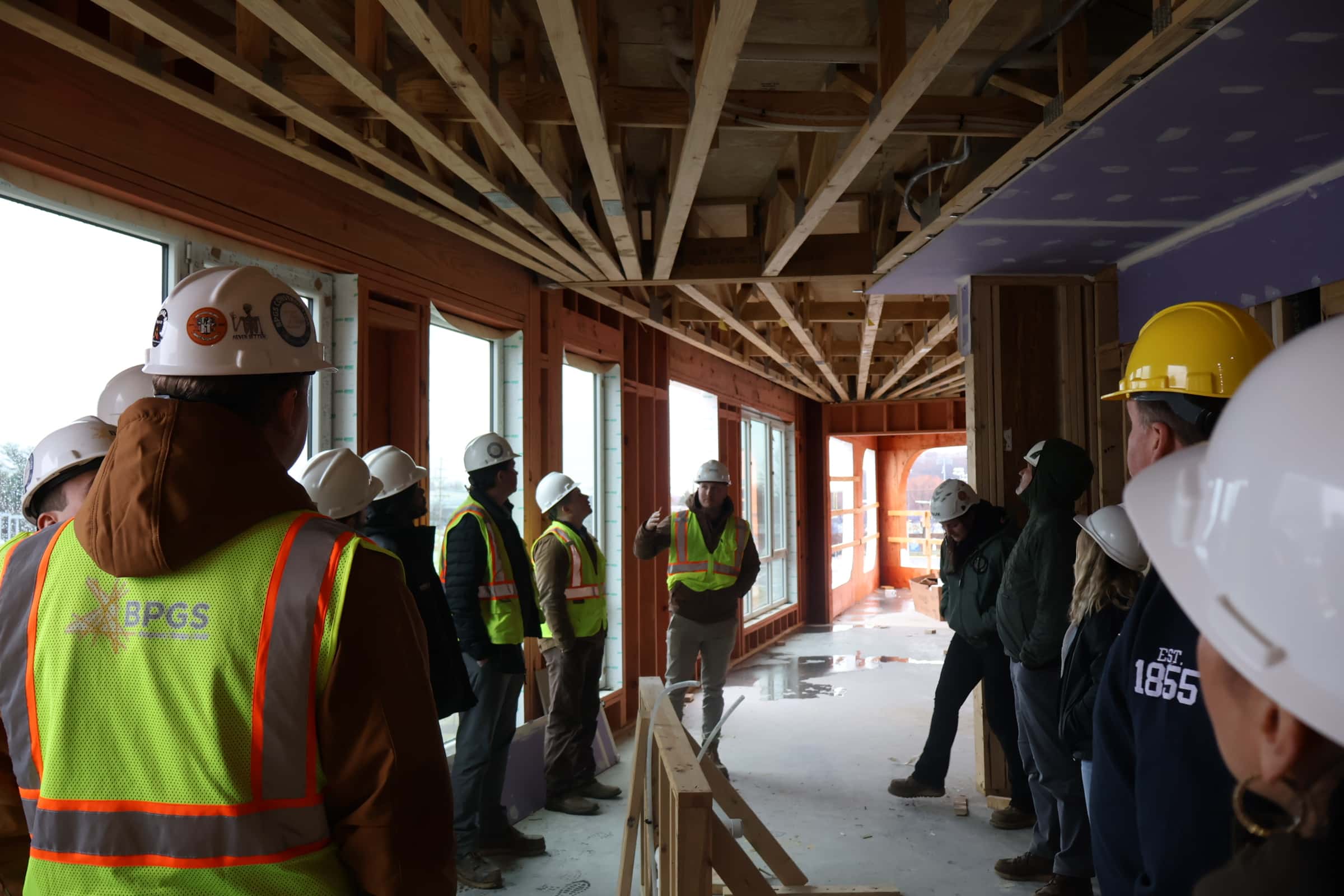
March 24, 2026 7:30 pmAt BPGS Construction, Build & Learn sessions focus on technical problem-solving and knowledge sharing across project teams. The team recently visited the UD Star Residential Project for a Build & Learn session highlighting the coordination required for hybrid structural construction.
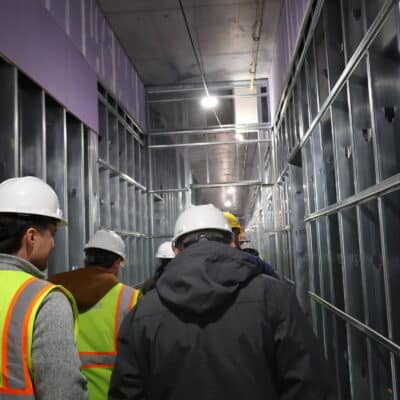
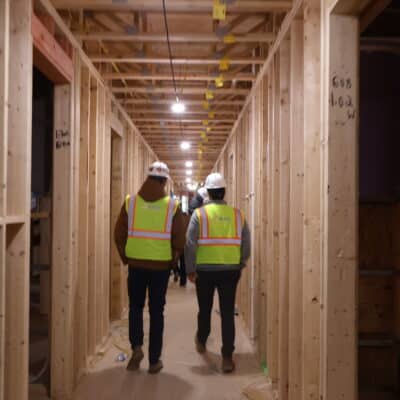
The project consists of two structures built upon concrete foundations and PT slabs. The vertical construction transitions from Cold-Formed Metal Framing (CFMF) on levels 1 and 2 into wood panelization for levels 3 through 7. Integrating these high-volume mechanical systems within the seven-story structure and its combined structural transitions requires detailed coordination, sequencing, and field-level adaptability.
To avoid safety concerns, schedule disruptions, and budget increases, success depends on meticulous coordination between trades, early verification of field conditions, and a clear understanding of how structural and mechanical systems interact throughout each phase of construction.
Coordinating Across Structural Transitions at UD STAR
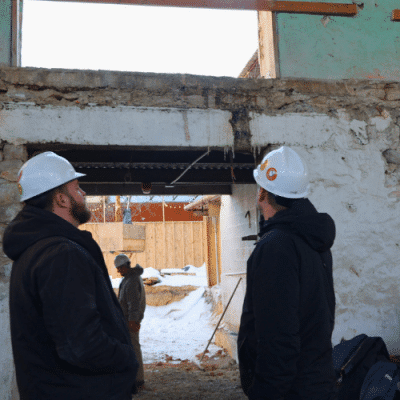
One of the primary challenges on the project was managing the transition between concrete and wood framing while maintaining alignment with mechanical systems. This type of installation required a multi-trade approach:
Platform framing was utilized throughout the wood-framed levels, with each floor constructed sequentially to create a stable working platform for the level above. Panelized wall systems, a form of platform framing, were prefabricated off-site and coordinated using Building Information Modeling (BIM), allowing the team to align mechanical penetrations, rough openings, and structural requirements prior to installation.
Acoustic floor assemblies incorporated an engineered SAP board subfloor system in place of traditional plywood and gypcrete. This approach improved schedule efficiency while achieving the required sound transmission (STC) ratings.
Field-Level Adaptation & Mechanical Coordination
High-density residential construction requires careful sequencing and consistent verification between design documents and field conditions. At UD STAR, BIM was used to validate sleeve placement and unit layouts prior to installation, reducing potential conflicts during construction.
When field conditions differed from model assumptions, the team adapted quickly:
- Riser Alignment: Where risers conflicted with structural members, BPGS coordinated an offset transition and ledger modification to return the piping into the wall cavity while maintaining structural compliance.
- Structural Reinforcement: In cases where plumbing rough-ins required penetrations larger than allowable limits in structural studs, Simpson stud shoes were used to reinforce affected areas. This maintained structural integrity without requiring the rerouting of mechanical systems.
Takeaways from the Field
Projects like UD STAR reinforce several core principles that guide execution across BPGS Construction projects:
- Continuous Verification – Model and field verification must remain continuous throughout installation, including scanning for misplaced sleeves.
- Mechanical Load Confirmation – Truss loading for ceiling-hung equipment, such as water heaters, must be confirmed during design to ensure proper support.
- Deflection Control – Deflection screws should be implemented to provide lateral support to non-load bearing walls while accommodating structural movement.
- Integrated Safety Planning – Roof anchor placement for fall protection and suspended access must be integrated into early framing coordination and certified for specific load characteristics.
Building Knowledge, Strengthening Teams
Our Build and Learn sessions are more than project recaps; they are opportunities to capture lessons from active projects and apply them across future work. UD STAR highlights the importance of precise coordination between structural systems and mechanical installation in multi-family construction. Projects of this scale require precision, adaptability, and consistent communication across trades. At UD STAR, BPGS Construction demonstrated how proactive planning and field-level problem solving contribute to long-term system performance and constructability.
If you’re passionate about collaboration, technical growth, and building with purpose, explore opportunities to grow with BPGS Construction.